Αρχειοθήκη ιστολογίου

Πέμπτη 20 Οκτωβρίου 2022

Long-term Traffic-related Air Pollutant Exposure and Amyotrophic Lateral Sclerosis Diagnosis

alexandrossfakianakis shared this article with you from Inoreader
imageBackground: Amyotrophic lateral sclerosis (ALS) is a fatal neurodegenerative disease. Limited evidence suggests ALS diagnosis may be associated with air pollution exposure and specifically traffic-related pollutants. Methods: In this population-based case–control study, we used 3,937 ALS cases from the Danish National Patient Register diagnosed during 1989–2013 and matched on age, sex, year of birth, and vital status to 19,333 population-based controls free of ALS at index date. We used validated predictions of elemental carbon (EC), nitrogen oxides (NOx), carbon monoxide (CO), and fine particles (PM2.5) to assign 1-, 5-, and 10-year average exposures pre-ALS diagnosis at study participants' present and historical residential addresses. We used an adjusted Bayesian hierarchical conditional logistic model to estimate individual pollutant associations and joint and average associations for traffic-related pollutants (EC, NOx, CO). Results: For a standard deviation (SD) increase in 5-year average concentrations, EC (SD = 0.42 µg/m3) had a high probability of individual association with increased odds of ALS (11.5%; 95% credible interval [CrI] = –1.0%, 25.6%; 96.3% posterior probability of positive association), with negative associations for NOx (SD = 20 µg/m3) (–4.6%; 95% CrI = 18.1%, 8.9%; 27.8% posterior probability of positive association), CO (SD = 106 µg/m3) (–3.2%; 95% CrI = 14.4%, 10.0%; 26.7% posterior probability of positive association), and a null association for nonelemental carbon fine particles (non-EC PM2.5) (SD = 2.37 µg/m3) (0.7%; 95% CrI = 9.2%, 12.4%). We found no association between ALS and joint or average traffic pollution concentrations. Conclusions: This study found high probability of a positive association between ALS diagnosis and EC concentration. Further work is needed to understand the role of traffic-related air pollution in ALS pathogenesis.
View on Web

Gestational Hypertensive Disorders and Maternal Breast Cancer Risk

alexandrossfakianakis shared this article with you from Inoreader
imageBackground: Preeclampsia and gestational hypertension are hypothesized to be associated with reduced maternal breast cancer risk, but the epidemiologic evidence is inconclusive. Our objective was to examine associations between gestational hypertensive disorders and breast cancer in a nationwide cohort of women with a family history of breast cancer. Methods: Women ages 35–74 years who had a sister previously diagnosed with breast cancer, but had never had breast cancer themselves, were enrolled in the Sister Study from 2003 to 2009 (N = 50,884). At enrollment, participants reported diagnoses of eclampsia, preeclampsia, or gestational hypertension in each pregnancy. We used Cox proportional hazards models to estimate hazard ratios (HRs) and 95% confidence intervals (CIs) for the association between history of a gestational hypertensive disorder and incident invasive breast cancer or ductal carcinoma in situ among 40,720 parous women. We used age as the time scale and adjusted for birth cohort, race–ethnicity, and reproductive, socioeconomic, and behavioral factors. We examined effect measure modification by risk factors for gestational hypertensive disease and breast cancer and assessed possible etiologic heterogeneity across tumor characteristics. Results: The prevalence of gestational hypertensive disease was 12%. During follow-up (mean = 10.9 years), 3,198 eligible women self-reported a breast cancer diagnosis. History of a gestational hypertensive disorder was not associated with breast cancer risk (HR = 1.0; 95% CI = 0.90, 1.1). We did not observe clear evidence of effect measure modification or etiologic heterogeneity. Conclusions: History of a gestational hypertensive disorder was not associated with breast cancer risk in a cohort of women with a first-degree family history of breast cancer.
View on Web

Prolonged Dexamethasone Exposure Enhances Zebrafish Lateral-Line Regeneration But Disrupts Mitochondrial Homeostasis and Hair Cell Function

alexandrossfakianakis shared this article with you from Inoreader
AbstractThe synthetic glucocorticoid dexamethasone is commonly used to treat inner ear disorders. Previous work in larval zebrafish has shown that dexamethasone treatment enhances hair cell regeneration, yet dexamethasone has also been shown to inhibit regeneration of peripheral nerves after lesion. We therefore used the zebrafish model to determine the impact of dexamethasone treatment on lateral-line hair cells and primary afferents. To explore dexamethasone in the context of regeneration, we used copper sulfate (CuSO4) to induce hair cell loss and retraction of nerve terminals, and then allowed animals to recover in dexamethasone for 48  h. Consistent with previous work, we observed significantly more regenerated hair cells in dexamethasone-treated larvae. Importantly, we found that th...
View on Web

Τετάρτη 19 Οκτωβρίου 2022

Sequence Analysis of Epstein‐Barr virus RPMS1 Gene in malignant hematopathy

alexandrossfakianakis shared this article with you from Inoreader

Abstract

The RPMS1 gene is the only member of the BamHI-A rightward transcripts (BARTs) family for which a full-length cDNA has been identified, and RPMS1 transcript has been confirmed in many EBV-positive malignancies. However, the effects of sequence variations of RPMS1 in hematological malignancies and their biological significance are unclear. To explore the association between RPMS1 gene variations and hematological malignancy, the RPMS1 gene of 391 EBV-positive samples from patients with EBV-positive leukemia, myelodysplastic syndromes (MDS) and lymphoma in northern China were sequenced. On the basis of phylogenetic tree and mutation characteristics of RPMS1, all the sequences were divided into five major types: RPMS1-A, RPMS1-B, RPMS1-C, RPMS1-E, and RPMS1-F. RPMS1-A type, similar to the prototype B95-8, was identified in 71.87% (281/391) of samples and was the major typ e in all subpopulations. The frequency of RPMS1-F type was significantly higher in all malignant hematopathy groups than in healthy donors. The Hodgkin lymphoma (HL) group contained more RPMS1-F than other malignant hematopathy groups, and acute myeloid leukemia (AML) contained more RPMS1-C type than other malignant hematopathy groups. Therefore, RPMS1-A is the main type of RPMS1 gene in northern China, and RPMS1-F may be associated with hematologic malignancies.

This article is protected by copyright. All rights reserved.

View on Web

Development and validation of a potential biomarker to improve the assessment of liver fibrosis progression in patients with chronic hepatitis B

alexandrossfakianakis shared this article with you from Inoreader

Abstract

Objectives

We aimed to develop and validate a novel combined score to improve the assessment of liver fibrosis progression in patients with chronic hepatitis B (CHB).

Methods

The serum levels of hub genes were examined by qRT-PCR in three cohorts of CHB patients.

Results

For significant liver fibrosis (≥S2), the areas under the receiver operating characteristics curves (AUROCs) of the combined score were 0.838, 0.842 and 0.881 in the three cohorts, respectively. And for advanced liver fibrosis (≥S3), the AUROCs were 0.794, 0.801 and 0.901, respectively. Compared with the results of AUROCs for aspartate aminotransferase-to-platelet ratio (APRI) and fibrosis index based on four factors (FIB-4) in the validation cohorts, better clinical diagnostic value for assessing the progression of liver fibrosis was found in the combined score. Additionally, univariate ordered logistic regression analysis indicated that the combined score could serve as a more superior and stable risk factor than APRI and FIB-4 in the assessment of liver fibrosis. For CHB patients with normal alanine aminotransferase (ALT), our results further emphasized the diagnostic value of the combined score for significant fibrosis (≥S2) and advanced fibrosis (≥S3). Moreover, it was found that patients with the high combined score, who were associated with the advanced fibrosis stage, had higher levels of drug sensitivity and immune checkpoint expression.

Conclusion

The novel combined score could serve as a potential biomarker and contribute to improving the assessment of fibrosis stage in CHB patients.

This article is protected by copyright. All rights reserved.

View on Web

Cochlear Implants for Single‐Sided Deafness: Quality of Life, Daily Usage, and Duration of Deafness

alexandrossfakianakis shared this article with you from Inoreader
Cochlear Implants for Single-Sided Deafness: Quality of Life, Daily Usage, and Duration of Deafness

The current study was undertaken to report our experience for adults undergoing cochlear implantation (CI) for single-sided deafness (SSD). We present the largest cohort of patients with SSD treated with CI to date. This group demonstrates significant benefit with regards to speech recognition scores, tinnitus measures, and quality of life metrics. We present novel insights regarding the CIQOL-10 measure, correlation of speech recognition and QoL scores with daily usage "datalogging" as well as the impact of duration of deafness on outcomes for patients with CI for SSD.


Objective

To report our experience for adults undergoing cochlear implantation (CI) for single-sided deafness (SSD).

Methods

This is a retrospective case series for adults with SSD who underwent CI between January 2013 and May 2021 at our institution. CNC and AzBio speech recognition scores, Tinnitus Handicap Inventory (THI), Speech, Spatial, and Qualities of Hearing Scale (SSQ12), datalogging, and the Cochlear Implant Quality of Life (CIQOL)-10 Global measure were utilized.

Results

Sixty-six adults underwent CI for SSD (median 51.3 years, range 20.0–74.3 years), and 57 (86.4%) remained device users at last follow-up. Compared to pre-operative performance, device users demonstrated significant improvement in speech recognition scores and achieved peak performance at six months post-activation for CNC (8.0% increased to 45.6%, p < 0.0001) and AzBio in quiet (12.2% increased to 59.5%, p < 0.0001). THI was decreased at 6 months post-implantation (58.1–14.6, p < 0.0001), with 77% of patients reporting improved or resolved tinnitus. Patients demonstrated improved SSQ12 scores as well as the disease-specific CIQOL-10 Global questionnaire. Duration of deafness was not associated with significant differences in speech recognition performance. Average daily wear time was positively associated with CNC and AzBio scores as well as post-operative CIQOL-10 scores.

Conclusions

Herein we present the largest cohort of adult CI recipients with SSD with data on speech recognition scores, tinnitus measures, and SSQ12. Novel insights regarding the correlation of datalogging, duration of deafness, and CI-specific quality of life (CIQOL-10) metrics are discussed. Data continue to support CI as an efficacious treatment option for SSD.

Level of Evidence

IV Laryngoscope, 2022

View on Web

Comparison of propeller flaps versus skin grafts for coverage of osteocutaneous fibula free flap donor site defects

alexandrossfakianakis shared this article with you from Inoreader

Abstract

Background

Authors compare use of propeller flaps versus skin grafts in defect coverage after fibula flap harvest.

Materials and Methods

Retrospective review of patients who received either PFPF or STSG. Primary predictor variable was technique, and secondary predictor variables were comorbidities. Primary outcome variable was flap/graft healing, and secondary outcome variables were cosmesis, adverse events, effect on activities of daily living (ADLs), pain, additional procedures, and cost. Statistical analysis performed via independent sample t tests, ANOVA, and χ 2 tests. Logistic regression analysis was performed.

Results

Study sample was 50 patients. PFPFs showed higher rates of success, while STSG showed increased complications and adverse events. Pain and ADLs significantly affected in STSG group. Cosmesis was better in the PFPF group, and overall cost was significantly higher in STSG group.

Conclusion

PFPFs show greater success rates, fewer complications, improved cosmesis, less pain, reduced cost compared to STSG for wound coverage after fibula flap harvest.

View on Web

Proton pump inhibitors and myocardial infarction: an application of active comparators in a self-controlled case series

alexandrossfakianakis shared this article with you from Inoreader

m_dyac196f1.jpeg?Expires=1729259607&Sign

Abstract
BackgroundPrevious studies investigating potential cardiovascular adverse events of acid-suppressing drugs are susceptible to protopathic bias and confounding. We aimed to investigate the association between short-term risk of myocardial infarction (MI) and proton pump inhibitors (PPIs) using a self-controlled case series (SCCS) with an active comparator.
Methods
We conducted a SCCS using a population-wide database from Hong Kong from 2003–2014. Adult with ≥1 outpatient oral PPI prescription or H2 receptor antagonist (H2RA) and MI during the observation period were included. We used both simple ratio and effect modifier approaches to SCCS with active comparators to obtain comparator adjusted estimates.
Results
A total of 2802 and 1889 people with MI who had exposure to PPIs and H2RA were included respectively. We observed a higher risk of MI during days 1–14 following the start of PPI prescription (Incidence rate ratio (IRR): 2.30, 95 % confidence interval (CI): 1.76–3.00) versus baseline. Similarly, we observed a higher risk of MI during days 1–14 following the start of H2RA prescription (IRR: 2.46, 95%CI: 1.92–3.16) versus baseline. In the novel SCCS analyses, comparator adjusted estimates were 0.93 (95%CI: 0.57–1.30) and 0.83 (95%CI: 0.58–1.20) during days 1–14 in simple ratio and effect modifier approach, respectively.
Conclusions
We observed no difference in risk of MI associated with PPIs compared with baseline using H2RA as the active comparator. The elevated risk of MI associated with PPIs is likely due to protopathic bias. More studies are required to explore the feasibility of using active comparators in SCCS to address protopathic bias in addition to confounding.
View on Web

Associations of Prenatal First Trimester Essential and Nonessential Metal Mixtures with Body Size and Adiposity in Childhood.

alexandrossfakianakis shared this article with you from Inoreader

SocialThumb.00001648.DC.jpeg

Background: Prenatal nonessential metals may contribute to postnatal adiposity, while essential metals may have metabolic benefits. We evaluated joint and individual associations between prenatal metals and childhood adiposity. Methods: We measured concentrations of six nonessential (arsenic, barium, cadmium, cesium, lead, mercury) and four essential (magnesium, manganese, selenium, zinc) metals in first trimester maternal blood from a pre-birth cohort. We collected anthropometric measures in early childhood, mid-childhood, and early adolescence including subscapular+tricep skinfold thickness (mm) (N=715-859), waist circumference (cm) (N=717-882), and BMI (z-score) (N=716-875). We measured adiposity in mid-childhood and early adolescence using bone densitometry total- and trunk fat-mass index (kg/m2) (N=511-599). We estimated associations using adjusted quantile g-computation and linear regression. Results: The nonessential metal mixture was associated with higher total (β=0.07, 95% CI: 0.01, 0.12) and trunk fat-mass index (β=0.12, CI: 0.02, 0.22), waist circumference (β=0.01, CI: 0.00, 0.01), and BMI (β=0.24, CI: 0.07, 0.41) in mid-childhood, and total fat-mass index (β=0.07, CI: 0.01, 0.14) and BMI (β=0.19, CI: 0.02, 0.37) in early adolescence. The essential metal mixture was associated with lower early adolescence total (β= –0.11, CI: -0.17, -0.04) and trunk fat-mass index (β=-0.13, CI: -0.21, -0.05), subscapular+tricep skinfold thickness (β=-0.02, CI: -0.03, -0.00), waist circumference (β=-0.003, CI: -0.01, -0.00), and BMI (β=-0.16, CI: -0.28, -0.04). Cadmium and cesium were individually associated with childhood adiposity at different timepoints. Conclusions: Prenatal first trimester essential metals were associated with lower childhood adiposity, whereas nonessential metals were associated with higher adiposity into adolescence. Copyright © 2022 Wolters Kluwer Health, Inc. All rights reserved.

View on Web

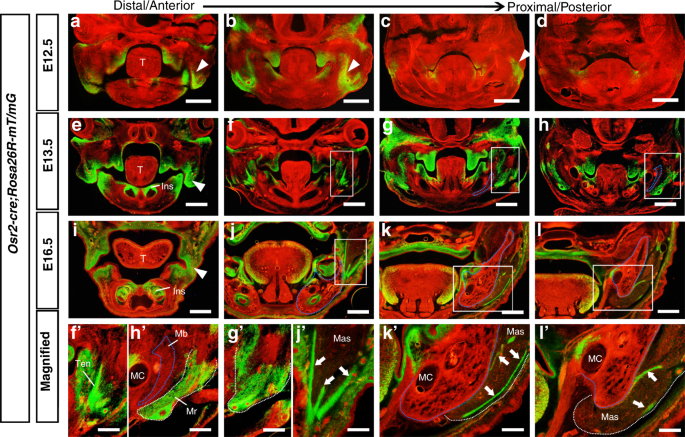
Disrupted tenogenesis in masseter as a potential cause of micrognathia

alexandrossfakianakis shared this article with you from Inoreader

41368_2022_196_Fig1_HTML.png

International Journal of Oral Science, Published online: 18 October 2022; doi:10.1038/s41368-022-00196-y

Disrupted tenogenesis in masseter as a potential cause of micrognathia
View on Web