Αρχειοθήκη ιστολογίου

Τετάρτη 25 Μαΐου 2022

Generation of novel SARS-CoV-2 variants on B.1.1.7 lineage in three patients with advanced HIV disease

alexandrossfakianakis shared this article with you from Inoreader
Abstract
The emergence of new SARS-COV-2 variants is of public health concern in case of vaccine escape. Described are three patients with advanced HIV-1 and chronic SARS-CoV-2 infection in whom there is evidence of selection and persistence of novel mutations which are associated with increased transmissibility and immune escape.
View on Web

Clinical outcomes and cost-effectiveness of superficial parotidectomy versus extracapsular dissection of the parotid gland: a single-centre retrospective study of 161 patients

alexandrossfakianakis shared this article with you from Inoreader
Improvements in preoperative diagnostics and intraoperative techniques have made the surgical excision of benign parotid gland tumours less invasive. Extracapsular dissection (ECD) has become more popular in comparison to superficial parotidectomy (SP), the gold standard. Although clinical outcomes have been reported, reports on cost-effectiveness are limited. The aim of this retrospective study was to analyse the surgical outcomes and cost-effectiveness of ECD versus SP in benign parotid tumour surgery. (Source: International Journal of Oral and Maxillofacial Surgery)
View on Web

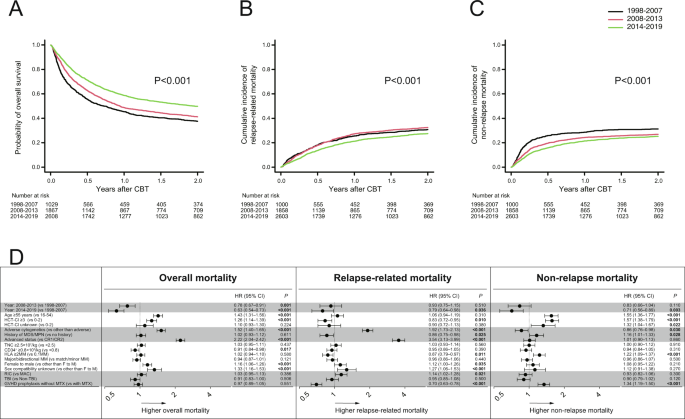
Improved trends in survival and engraftment after single cord blood transplantation for adult acute myeloid leukemia

alexandrossfakianakis shared this article with you from Inoreader

41408_2022_678_Fig1_HTML.png

Blood Cancer Journal, Published online: 25 May 2022; doi:10.1038/s41408-022-00678-6

Improved trends in survival and engraftment after single cord blood transplantation for adult acute myeloid leukemia
View on Web

CSMD1 suppresses cancer progression by inhibiting proliferation, epithelial-mesenchymal transition, chemotherapy-resistance and inducing immunosuppression in esophageal squamous cell carcinoma

alexandrossfakianakis shared this article with you from Inoreader

1-s2.0-S0014482722X00116-cov150h.gif

Publication date: Available online 25 May 2022

Source: Experimental Cell Research

Author(s): Xing Wang, Xinwei Chen, Yuanyuan Liu, Shan Huang, Jian Ding, Baoxin Wang, Pin Dong, Zhenfeng Sun, Lixiao Chen

View on Web

Efficacy and safety of Elian Granules in treating chronic atrophic gastritis:

alexandrossfakianakis shared this article with you from Inoreader

13063.jpg

Multifocal atrophic gastritis and intestinal metaplasia are considered to be important links in the gastric precancerous cascade. However, there are no specific drugs for these conditions. Although many studie...
View on Web

Serum uric acid is not associated with major depressive disorder

alexandrossfakianakis shared this article with you from Inoreader

European Journal of Clinical Nutrition, Published online: 25 May 2022; doi:10.1038/s41430-022-01165-8

Serum uric acid is not associated with major depressive disorder in European and South American populations: a meta-analysis and two-sample bidirectional Mendelian Randomization study
View on Web

Olutasidenib (FT-2102) in patients with relapsed or refractory IDH1-mutant glioma: a multicenter, open-label, phase 1b/2 trial

alexandrossfakianakis shared this article with you from Inoreader
Abstract
Background
Olutasidenib (FT2102) is a highly potent, orally bioavailable, brain-penetrant and selective inhibitor of mutant isocitrate dehydrogenase 1 (IDH1). The aim of the study was to determine the safety and clinical activity of olutasidenib in patients with relapsed/refractory gliomas harboring an IDH1  R132X mutation.
Methods
This was an open-label, multicenter, non-randomized, phase 1b/2 clinical trial. Eligible patients (≥18 years) had histologically confirmed IDH1  R132Xmutated glioma that relapsed or progressed on or following standard therapy and had measurable disease. Patients received olutasidenib, 150 mg orally twice daily (BID) in continuous 28-day cycles. The primary endpoints were dose-limiting toxicities (DLTs) (cycle 1) and safety in phase 1 and objective response rate using the Modified Res ponse Assessment in Neuro-Oncology criteria in phase 2.
Results
Twenty-six patients were enrolled and followed for a median 15.1 months (7.3‒19.4). No DLTs were observed in the single-agent glioma cohort and the pharmacokinetic relationship supported olutasidenib 150 mg BID as the recommended phase 2 dose. In the response-evaluable population, disease control rate (objective response plus stable disease) was 48%. Two (8%) patients demonstrated a best response of partial response and eight (32%) had stable disease for at least 4 months. Grade 3‒4 adverse events (≥10%) included alanine aminotransferase increased and aspartate aminotransferase increased (three [12%], each).
Conclusions
Olutasidenib 150 mg BID was well tolerated in patients with relapsed/refractory gliomas harboring an IDH1  R132X mutation and demonstrated preliminary evidence of clinical activity in this heavily pretreated populat ion.

View on Web

Τρίτη 24 Μαΐου 2022

Duration of replication-competent SARS-CoV-2 shedding among patients with severe or critical coronavirus disease 2019 (COVID-19)

alexandrossfakianakis shared this article with you from Inoreader
Abstract
Background
Patterns of shedding replication-competent SARS-CoV-2 in severe or critical COVID-19 are not well-characterized. We investigated the duration of replication-competent SARS-CoV-2 shedding in upper and lower airway specimens from patients with severe or critical COVID-19.
Methods
We enrolled patients with active or recent severe or critical COVID-19 who were admitted to a tertiary care hospital intensive care unit (ICU) or long-term acute care hospital (LTACH) because of COVID-19. Respiratory specimens were collected at predefined intervals and tested for SARS-CoV-2 using virus culture and RT-qPCR. Clinical and epidemiologic metadata were reviewed.
Results
We collected 529 respiratory specimens from 78 patients. Replication-competent virus was detected in 4 of 11 (36.3%) immunocompromised patients up to 45 days after symptom onset, and in 1 of 67 (14.9%) immunocompetent patients 10 days after symptom onset (P = 0.001). All culture-positive patients were in the ICU cohort and had persistent or recurrent symptoms of COVID-19. Median time from symptom onset to first specimen collection was 15 days (range, 6-45) for ICU patients and 58.5 days (range, 34-139) for LTACH patients. SARS-CoV-2 RNA was detected in 40 of 50 (80%) ICU patients and 7 of 28 (25%) LTACH patients.
Conclusions
Immunocompromise and persistent or recurrent symptoms were associated with shedding of replication-competent SARS-CoV-2, supporting the need for improving respiratory symptoms in addition to time as criteria for discontinuation of transmission-based precautions. Our results suggest that the period of potential infectiousness among immunocompetent patients with severe or critical COVID-19 may be similar to that reported for patients with milder disease.
View on Web

Zoledronate and lipopolysaccharide suppress osteoblast differentiation through downregulating phosphorylation of Smad in pre-osteoblastic MC3T3-E1 cells

alexandrossfakianakis shared this article with you from Inoreader

Publication date: Available online 24 May 2022

Source: Journal of Oral and Maxillofacial Surgery, Medicine, and Pathology

Author(s): Shinsuke Amamoto, Daigo Yoshiga, Shirou Tabe, Shoichiro Kokabu, Wataru Fujii, Hisako Hikiji, Kazuhiro Tominaga, Izumi Yoshioka

View on Web

Hepatoprotective effect of the radiation countermeasure flagellin in the long term after irradiation of mice

alexandrossfakianakis shared this article with you from Inoreader
.
View on Web

Utility of prophylactic percutaneous endoscopic gastrostomy tube in head and neck cancer patients undergoing concurrent chemoradiation: A prospective observational cohort

alexandrossfakianakis shared this article with you from Inoreader

1-s2.0-S0196070922X00021-cov150h.gif

Publication date: Available online 23 May 2022

Source: American Journal of Otolaryngology

Author(s): Tanadech Dechaphunkul, Pawitra Soonthornrak, Sarayut Lucien Geater, Arunee Dechaphunkul

View on Web