Αρχειοθήκη ιστολογίου

Κυριακή 7 Μαρτίου 2021

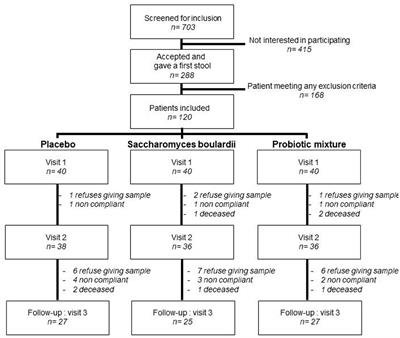
Do Probiotics During In-Hospital Antibiotic Treatment Prevent Colonization of Gut Microbiota With Multi-Drug-Resistant Bacteria? A Randomized Placebo-Controlled Trial Comparing Saccharomyces to a Mixture of Lactobacillus, Bifidobacterium, and Saccharomyces

alkiviadis.1961 shared this article with you from Inoreader

578089_Thumb_400.jpg

Objective: Most infections with Enterobacteriaceae producing AmpC β-lactamase (AmpC)-, extended-spectrum β-lactamase (ESBL)-, and carbapenemase-producing bacteria, vancomycin-resistant Enterococcus as well as naturally resistant non-fermenting bacteria such as Pseudomonas aeruginosa, are related to a prior colonization of the gut microbiota. The objective of this study was to determine whether treatment with probiotics during an antibiotic treatment could prevent the colonization of the gut microbiota with multi-drug resistant bacteria.

Method: In total, 120 patients treated for 10 days with amoxicillin-clavulanate antibiotics were included in a randomized, placebo-controlled, double-blinded trial, comparing the effects of a 30 days treatment with placebo Saccharomyces boulardii CNCM I-745® and a probiotic mixture containing Saccharomyces boulardii, Lactobacillus acidophilus NCFM, Lactobacillus paracasei Lpc-37, Bifidobacterium lactis Bl-04, and Bifidobacterium lactis Bi-07 (Bactiol duo®). Study treatment was initiated within 48 h of the antibiotic being initiated. Most of the patients included were elderly with a mean age of 78 years old with multiple comorbidities. Stools were collected at the time of inclusion in the trial, at the end of the antibiotic treatment, and the end of the study treatment. These were cultured on selective antibiotic media.

Results: Treatment with the probiotic mixture led to a significant decline in colonization with Pseudomonas after antibi otic treatment from 25 to 8.3% (p = 0.041). Colonization with AmpC-producing enterobacteria was transiently increased after the antibiotic treatment (p = 0.027) and declined after the probiotic intervention (p= 0.041). No significant changes were observed in the placebo and Saccharomyces groups. Up to 2 years after the trial, no infection with ESBL-producing bacteria was observed in the probiotic mixture group.

Conclusion: The association of Saccharomyces boulardii with specific strains of Lactobacillus and Bifidobacterium influences antibiotic treatment by counteracting the colonization of the colon microbiota with antibiotic-resistant pathogens.

View on the web

Prevalence and Factors Associated With Body Pain

alkiviadis.1961 shared this article with you from Inoreader

634123_Thumb_400.jpg

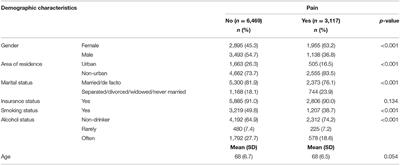
Background: Pain management has become a critical problem worldwide with the aging population. More than half of older people have experienced pain with different severity. The aim of this research is to identify the characteristics of older people with body pain and the associations between pain and characteristics of demographic, health status, and health services use amongst Chinese seniors.

Methods: This cross-sectional study was based on the China Health and Retirement Longitudinal Study (CHARLS), using follow-up survey data in 2015. The national survey comprised 20,284 women and men aged 45 years or older who completed questionnaires. Data of older people who were asked whether they had troubles with body pain were extracted and analyzed. Multiple logistic regression modeling was used to determine the important indicators (demographic, health status, and health services use) amongst Chinese elderly with pain.

Results: Analyses revealed that 32.5% (n = 9,586) of Chinese people aged over 60 reported having body pain. Pain is positively associated with female gender (OR = 2.08, 95% CI 1.80–2.39, p < 0.001), living in non-urban areas (OR = 1.49, 95% CI 1.25–1.77, p < 0.001), having physical disabilities (OR = 1.45, 95% CI 1.15–1.82, p = 0.002), diagnosed with stomach diseases (OR = 1.40, 95% CI 1.20–1.64, p < 0.001), diagnosed with arthritis (OR = 1.91, 95% CI 1.66–2.20, p < 0.001), self-rating with poor health status (OR = 7.03, 95% CI 5.63–8.78, p < 0.001), self-purchased over-the-counter western medications (OR = 1.50, 95% CI 1.30–1.73, p < 0.001) and self-purchased Chinese herbal medicine (OR = 1.52, 95% CI 1.24–1.85, p < 0.001).

Conclusion: Body pain is common amongst the Chinese elderly. This research highlights the need for further nationwide studies exclusively focusing on people with pain including the elder population, and provides evidence-based insights for healthcare providers and policy-makers, to improve the quality of pain management. Future research should also pay attention to the importance of health literacy for health outcomes with regard to pain management.


View on the web

Systematic Review of Potential Occupational Respiratory Hazards Exposure Among Sewage Workers

alkiviadis.1961 shared this article with you from Inoreader

646790_Thumb_400.jpg

Background: Sewage workers have a higher risk of exposure to various potential occupational respiratory hazards found in sewage plants. Although previous studies discuss occupational respiratory hazard concentration impacting sewage workers' respiratory health, the results are scarce and mixed. Hence, there is a need to identify the potential respiratory hazards in sewage plants so as to clarify the short- and long-term respiratory health effects. Therefore, this systematic review (SR) aims to critically rev iew previous studies investigating potential respiratory hazards found at sewage plants and their effects on sewage workers' respiratory health.

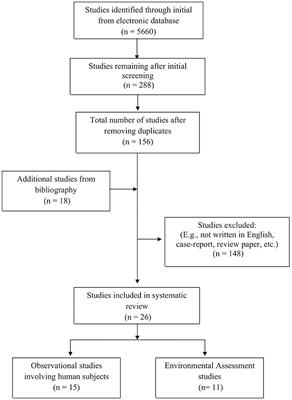
Methods: An SR was conducted using PubMed, EBSCO Medline, Web of Science, Scopus, and Google Scholar on peer-reviewed studies published between January 1994 and October 2020 evaluating the impact of potential exposure to respiratory hazards and its effects on respiratory health among sewage workers. "Sewage treatment plant," "respiratory hazards," and "respiratory health effects" were the three main search terms chosen in this SR. The inclusion criteria were (1) studies on potential occupational respiratory hazard exposure among sewage workers, (2) manuscripts written in English, and (3) studies published in the peer-reviewed literature. The human observational studies' quality was assessed using the Effective Public Health Practice Project Quality Assessment Tool.

Results: We identified 5,660 articles through an ini tial database search. Only 26 items met the inclusion criteria and were included in this review; 15 human observational studies and 11 environmental assessment studies were conducted in the sewage industries. Most of the human observational studies were rated as moderate quality, two studies were rated as weak quality, and one study with strong quality was identified. Hydrogen sulfide, bioaerosols, particulate matter 2.5 (PM 2.5), and volatile organic compounds (VOC) were found to be potential respiratory hazards. Most of the risks contributed to adverse outcomes on the sewage workers' respiratory health with some inconsistent findings on the relationship between respiratory hazard exposure and respiratory health effects.

Conclusion: Our review finds that, although this area is of great importance, quality studies are still lacking. There is a need for additional studies to clarify the effects of respiratory hazard exposure on sewage workers and respiratory health, especially PM 2.5 and VOC.

View on the web

Preoperative tracheotomy as reflection of tumor size impacting oncologic outcomes of patients with advanced stage glottic carcinoma

xlomafota13 shared this article with you from Inoreader

Eur Arch Otorhinolaryngol. 2021 Mar 6. doi: 10.1007/s00405-021-06721-9. Online ahead of print.

ABSTRACT

PURPOSE: The aim of this study was to evaluate the influence of preoperative tracheotomy on oncologic outcomes of advanced stage glottic carcinoma patients, and to explore the potential reason.

METHODS: We retrospectively analyzed 413 consecutive advanced stage glottic carcinoma patients from January 2005 to December 2010. The correlation of preoperative tracheotomy and potential impacting factor of tumor size involving tumor diameter and tumor area with overall survival (OS) and disease-free survival (DFS) was fully assessed.

RESULTS: Our cohort consisted of 302 (73.1%) patients with T3 and 111 (26.9%) patients with T4, and 98 (23.7%) patients received preoperative tracheotomy. The OS and DFS rates of patients receiving preoperative tracheotomy were worse than those without (5-year OS: 49.3% versus 69.8%; 5-year DFS: 45. 3% versus 61.0%). The mean tumor diameter and tumor area of patients with preoperative tracheotomy were greater than those without (3.3 cm versus 2.4 cm, 8.9 cm2 versus 4.7 cm2). The optimal cutoff values of tumor diameter and tumor area for tracheotomy were 2.85 cm and 6.64 cm2. Tumor diameter and tumor area were correlated with tracheotomy intervention. Furthermore, when considering the potential effect of tumor area in multivariate model, we found that it was a significant factor in survival outcomes but variable of preoperative tracheotomy was not.

CONCLUSION: This study indicates that tumor size is correlated with preoperative tracheotomy, and tracheotomy intervention may be reflection from effect of great tumor size that is a true adverse factor influencing oncologic outcomes of advanced stage glottic carcinoma patients.

PMID:33675419 | DOI:10.1007/s00405-021-06721-9

View on the web

The aspartate aminotransaminase/alanine aminotransaminase (De Ritis) ratio predicts sensitivity to radiotherapy in head and neck carcinoma patients

xlomafota13 shared this article with you from Inoreader

Abstract

Background

The aim of this study is to evaluate the relationship between the aspartate aminotransaminase (AST) and alanine aminotransaminase (ALT) ratio and local disease control in patients with head and neck squamous cell carcinomas (HNSCC) treated with radiotherapy/chemoradiotherapy.

Methods

We calculated the pre‐treatment AST/ALT ratio in 670 patients with HNSCC treated with radiotherapy (n = 309, 46.1%) or chemoradiotherapy (n = 361, 53.9%).

Results

Five‐year local recurrence‐free survival for patients with a low AST/ALT ratio value (n = 529, 79.0%) was 75.0% (95% CI: 71.1–78.9), and for patients with a high value (n = 141, 21.0%) it was 53.4% (CI 95: 44.4–62.4) (p = 0.0001). In a multivariable analysis, patients with a high ratio had nearly twice the risk of having a local tumor recurrence (HR 1.97, 95% CI 1.42–2.75, p = 0.0001).

Conclusion

The AST/ALT ratio was independently associated with the risk of local recurrence in patients with HNSCC treated with radiotherapy or chemoradiotherapy.

View on the web

Non-negative matrix factorization-based time-frequency feature extraction of voice signal for Parkinson's disease prediction

xlomafota13 shared this article with you from Inoreader

1-s2.0-S0885230821000231-fx1.jpg

Publication date: Available online 6 March 2021

Source: Computer Speech & Language

Author(s): Biswajit Karan, Sitanshu Sekhar Sahu, Juan Rafael Orozco-Arroyave, Kartik Mahto

View on the web

Mu-Opioid Receptor Expression in Laryngeal Cancer

xlomafota13 shared this article with you from Inoreader
Expression of mu-opioid receptors (MORs) has not been investigated in head and neck cancer. In this study, we aimed to assess the expression of opioids receptors in laryngeal cancer, compared to adjacent non-malignant tissue.
View on the web

Πέμπτη 4 Μαρτίου 2021

Novel C‐arm based planning spine surgery robot proved in a porcine model and quantitative accuracy assessment methodology

xlomafota13 shared this article with you from Inoreader

Abstract

Background

We assessed pedicle screw accuracy utilizing a novel navigation‐based spine surgery robotic system by comparing planned pathways with placed pathways in a porcine model.

Methods

We placed three mini screws per vertebra for accuracy evaluation and used a reference frame for registration in four pigs (46 screws in 23 vertebrae). We planned screw paths and performed screw insertion under robot guidance. Using C‐arm and CT images, we evaluated accuracy by comparing the 3D distance of the placed screw head/tip from the planned screw head/tip and 3D angular offset.

Results

Mean registration deviation between the preoperative 3D space (C‐arm) and postoperative CT scans was 0.475 ± 0.119 mm. The average offset from preoperative plan to final placement was 4.8 ± 2.0 mm from the head (tail), 5.3 ± 2.3 mm from the tip and 3.9 ± 2.4 degrees of angulation.

Conclusions

Our spine surgery robot showed good accuracy in executing an intended planned trajectory and screw path. This faster and more accurate robotic system will be applied in future studies, first in cadavers and subsequently in the clinical field.

View on the web

Evaluation of image quality and assessability of a new flat‐panel 3D C‐arm compared to mobile and fixed computed tomography in posterior spinal fixation

xlomafota13 shared this article with you from Inoreader

Abstract

Background

This study evaluates image quality of a new flat‐panel three‐dimensional (3D) C‐arm to the current generation and to intraoperative and stationary computed tomography (CT) in spinal surgery.

Methods

Three‐dimensional‐imaging of 44 posterior screws acquired with two generations of 3D C‐arms (Arcadis Orbic, AO and Cios Spin, CS, Siemens, Germany) and CT scans (mobile intraoperative CT Airo, iCT, Brainlab, Germany and stationary CT Aquilion 32, sCT, Toshiba, Japan) were performed. Evaluation regarded assessability and measurements of implant position.

Results

Assessability score was 0.11 in AO, 0.56 in sCT, 0.91 in iCT and 1.46 in CS (p < 0.0005). AO and CS showed a significant difference in accuracy (p = 0.001) as well as CS and iCT (p < 0.001). Measurements of protrusion over the anterior edge did not show a significant difference (p = 0.341).

Conclusions

Image quality of the new generation of flat‐panel 3D C‐arms competes with CT imaging and offers significant advantages compared to the former generation.

View on the web

A case of reversed intestinal rotation revealed by volvulus in adult: anatomo-radiological correlations

xlomafota13 shared this article with you from Inoreader

pubmed-meta-image.png

Surg Radiol Anat. 2021 Mar 3. doi: 10.1007/s00276-021-02727-4. Online ahead of print.

ABSTRACT

We report a case of reversed rotation (RR) of the midgut, the rarest form of intestinal malrotation (IMR), revealed by a chronic volvulus, in a 42-year-old woman presenting with episodes of abdominal pain occurring after heavy meals. The complete preoperative diagnosis was obtained by contrast-enhanced computed tomography (CT). Classical signs of volvulus were associated with typic al findings of RR comprising an unusual position of the third duodenum in front of the mesenteric vessels and a very unusual location of the transverse colon behind these vessels. Complete absence of fixation of the right colon allowed secondary volvulus. A detailed reminder of the embryology of IMR and RR is presented.

PMID:33660035 | DOI:10.1007/s00276-021-02727-4

View on the web

Removal of Airway Foreign Body in a Premature Neonate

xlomafota13 shared this article with you from Inoreader

pubmed-meta-image.png

Ann Otol Rhinol Laryngol. 2021 Mar 4:3489421999536. doi: 10.1177/0003489421999536. Online ahead of print.

ABSTRACT

OBJECTIVE: Airway foreign bodies are the leading cause of infantile deaths and fourth among preschool children. Airway foreign bodies in extremely premature neonates represent a rare but potentially lethal entity. There are very few reports in the literature describing the treatment of such a condition in premature neonates. The objectives of this report are to describe the safe removal of an airway foreign body in an extremely premature infant using urologic instruments in a trans-endotracheal tube fashion and to review the literature for other techniques that have proven safe and effective, thereby adding technical options for future cases.

METHODS: We reviewed the case reported and reviewed pertinent literature.

RESULTS: A 2-week old, ex-24 3/7-week, 820-g pre-mature infant was intubated with a 2.5 endotracheal tube. After intubation, a 2-cm foreign body was discovered in the distal trachea by chest x-ray. The child's respiratory status continuously deteriorated with increasing oxygen and positive pressure requirements. While remaining intubated, the child underwent direct suspension laryngoscopy, the ventilator circuitry was disconnected, and the object was successfully removed using a 1.2 mm rigid ureteroscope and 1.1 mm grasping forceps through the 2.5 endotracheal tube.

CONCLUSION: This case report demonstrates the effectiveness of using a 1.2 mm ureteroscope and 1.2 mm urologic graspers to extract an airway foreign body from an extremely premature neonate through an endotracheal tube without paralyzing the patient. This method provides a safe and effective means of visualizing and, if necessary, manipulating the airway in a population prone to respiratory complications.

PMID:33660549 | DOI:10.1177/0003489421999536

View on the web