Αρχειοθήκη ιστολογίου

Δευτέρα 29 Αυγούστου 2022

Epidemiology and Etiology of Chronic Rhinosinusitis in Asia – a Narrative Review

alexandrossfakianakis shared this article with you from Inoreader

Abstract

Background

Despite having a similar prevalence to Western populations, literature on chronic rhinosinusitis (CRS) in the Asian population is sparse. There is limited data on the epidemiology and etiology of CRS in Asia.

Objectives

To review the current literature on the epidemiology and etiology of chronic rhinosinusitis (CRS) in Asia.

Methods

This is a narrative review of published data on the epidemiology and etiology of CRS. Studies on CRS in Asian countries, published in English and indexed on PubMed or Google Scholar were reviewed. Where available, data extracted included epidemiology, endotype and cytokine profiles and genetic profiles.

Results and Conclusion

The prevalence of CRS in Asia ranges widely from 2.1% -28.4%. Type 2 inflammation has been reported in 5-55% of Asian patients, with lower levels of Type 2 cytokines reported in head to head comparisons of Western vs Asian patients. Notably, there exists marked heterogeneity in criterion of the tissue eosinophilic infiltration for diagnosis of type 2 chronic rhinosinusitis. Our review suggests that differences in prevalence of CRS and proportion of eosinophilic CRS between Asia and Europe and the Americas requires further study. Large-scale Asian studies utilizing standardized definitions are needed to bridge this gap. Head to head genetic and microbiomal analysis may also be useful in understanding differences in CRS between the Asian and Western populations.

View on Web

The analgesic and anti‐hemorrhagic efficacy of platelet‐rich plasma in tonsillectomy: A systematic review and meta‐analysis of randomized controlled trials

alexandrossfakianakis shared this article with you from Inoreader

Abstract

Aim

To conduct a systematic review and meta-analysis of all randomized controlled trials (RCTs) that evaluated the analgesic and anti-hemorrhagic efficacy of platelet-rich plasma (PRP) among patients undergoing tonsillectomy.

Methods

PubMed, Scopus, Web of Science, Cochrane Central Register of Controlled Trials (CENTRAL), and Google Scholar databases were screened from inception until July 2021, and updated in December 2021. Risk of bias of the included studies was evaluated according to the Cochrane Collaboration tool. The efficacy endpoints were summarized as risk ratio (RR) or standardized mean difference (SMD) with 95% confidence interval (CI).

Results

Seven RCTs were analyzed, comprising a total of 392 patients. Risk of bias evaluation showed an overall high risk in one RCT, low risk in four RCTs, and some concerns in two RCTs. The pooled results revealed that the mean postoperative pain score was significantly reduced in favor of the PRP group compared with the control group (SMD=-1.38, 95% CI [-1.91, -0.85], p<0.001). Subgroup analysis showed the effect estimate was statistically significant for early postoperative pain (day 0 to day 3), without substantial difference between both groups on late postoperative pain (day 5 and day 7). Moreover, the rate of postoperative hemorrhage was significantly reduced in favor of the PRP group compared with the control group (RR=0.16, 95% CI [0.05, 0.50], p=0.001). Subgroup analysis showed the effect estimate was statistically significant for the rate of primary and secondary hemorrhage.

Conclusion

PRP was associated with significant reduction in postoperative pain and hemorrhage among patients undergoing tonsillectomy.

This article is protected by copyright. All rights reserved.

View on Web

Κυριακή 28 Αυγούστου 2022

Study on the surface properties of different commercially available CAD/CAM materials for implant‐supported restorations

alexandrossfakianakis shared this article with you from Inoreader

Abstract

Objective

To determine if there are any differences in surface characteristics (surface roughness and contact angle) among different CAD/CAM materials indicated for fabricating implant-supported restorations, following all the material preparation protocols provided by the manufacturer.

Materials and Methods

One-hundred forty-four specimens were divided into six groups: RBC (resin-based composite), PMMA (polymethyl methacrylate), PEEK (polyether ether ketone), ZP (zirconia polished), ZG (zirconia glazed) and CoCr4 (CoCr4 alloy). The experimental part included surface roughness (SR) and contact angle of water (WCA) analyses, fulfilled with Atomic Force Microscopy (AFM) and Scanning Electron Microscopy (SEM) view of surface topography. The data were analyzed using Kruskal-Wallis test with a Dunn's post hoc analysis, the correlation between measurements was tested using Spearman's rank correlation coefficient and all data were presented as mean ± SD.

Results

ZG specimens were significantly rougher compared to other groups (p ≤ 0.05). The WCA measurements revealed significantly lower mean values in ZG group (p ≤ 0.05), contrary to PEEK and CoCr4, where significantly higher mean values were observed, compared to other groups (p ≤ 0.05). There exist a moderate negative correlation between the SR and WCA (ρ = −0.41). AFM 3D and SEM 2D images presented more or less heterogeneous surface of all materials.

Conclusions

There were statistically significant differences in surface roughness and contact angle among tested material groups. Moderate negative correlation was found between surface roughness and contact angle of tested material groups.

Clinical Significance

The study gives us a better understanding of influence of physicochemical characteristics of investigated materials on their surface properties and provides useful knowledge for future researches in a view of material's behavior under in vivo conditions, when it comes to a question of features related to surface quality, such as microbial adhesion, corrosion, wear, biocompatibility and esthetics.

View on Web

Πέμπτη 25 Αυγούστου 2022

Low spontaneous clearance rates of recently acquired hepatitis C virus in HIV-positive MSM (The PROBE-C Study)

alexandrossfakianakis shared this article with you from Inoreader

cid_ogimage.png

Abstract
Background
Using direct acting antivirals (DAA) for recently acquired hepatitis C virus (RAHCV-) infections, particularly in HIV-positive men having sex with men (MSM), dramatically reduced hepatitis C incidence. However, implementation into clinical practice is challenging. The aim of this study was to analyse spontaneous clearance (SC) rates of RAHCV and to identify predictors of SC.
Methods
The PROBE-C study is an observational European cohort on RAH CV-infections in HIV-positive MSM. Between 2007 and 2017, RAHCV-infections were documented with at least 12 months of follow-up. Fisher's exact, chi-square and Mann-Whitney U test were used for statistical analysis.
Results
464 RAHCV-infections were documented. 457/464 (98%) cases were male, median age was 41 years (IQR 38-46). Main risk groups for HCV-transmission were MSM (98.9%). Most participants were infected with HCV-genotype (GT) 1 (78.3%). Median baseline HCV-RNA was 230,000 (135,000-474,432) IU/mL, median CD4+-T cell count was 574 (547-604) cells/µL. 92% of all cases received combination antiretroviral therapy with 91% showing suppressed HIV-RNA (<200 copies/mL). Median maximum alanine aminotransferase was 445 (402-522) U/L.SC of RAHCV-infection occurred in 55/464 (11.9%) cases. A >2log decline in HCV-RNA four weeks after diagnosis of RAHCV infection was the strongest predictor of SC (p < 0.001, sensitivity 96.4%, specificity 97.5%, PPV 8 4.1%, NPV 99.5%).
Conclusions
SC of RAHCV in HIV-positive MSM is only found in 11.9% of cases and a <2log drop in HCV-RNA at week four after diagnosis should prompt for early DAA-based treatment. However, immediate DAA treatment for RAHCV-infection may also be favoured in patients with ongoing transmission risk behaviour.
View on Web

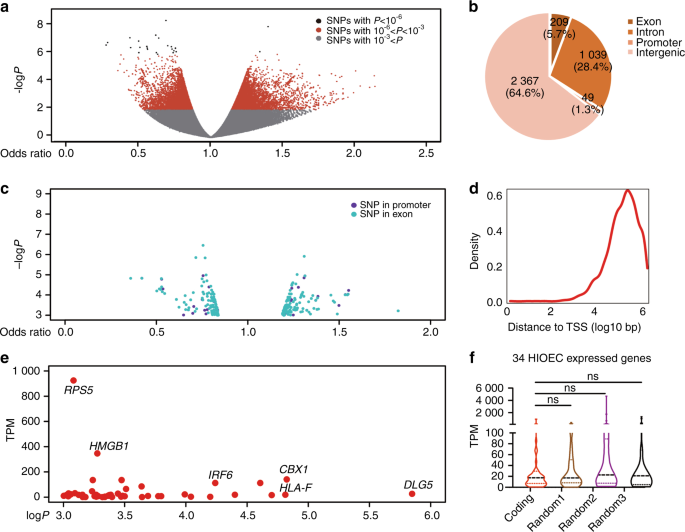
Chromatin conformation of human oral epithelium can identify orofacial cleft missing functional variants

alexandrossfakianakis shared this article with you from Inoreader

41368_2022_194_Fig1_HTML.png

International Journal of Oral Science, Published online: 25 August 2022; doi:10.1038/s41368-022-00194-0

Chromatin conformation of human oral epithelium can identify orofacial cleft missing functional variants
View on Web

Plasma Circulating Tumor HPV DNA and HPV-Related Oropharynx Cancer—A Caution—Reply

alexandrossfakianakis shared this article with you from Inoreader

jamanetwork.com

In Reply Dr Johnson and colleagues raise a good point, as expressed in our article, that our findings should not be inferred to suggest that circulating tumor human papillomavirus (HPV) DNA (ctHPVDNA) is ready to be used for screening. Our observation that no ctHPVDNA was detected in healthy participants with detectable salivary HPV DNA or E6 serum antibody suggests a low false-positive rate (ie, suggests good specificity). However, as pointed out in the discussion of our research letter, and by Johnson et al, it is possible that the detection methods used in our study could be insensitive, and additional research is needed to verify the finding of high specificity in our study.
View on Web

Τετάρτη 24 Αυγούστου 2022

Langerhans cell histiocytosis of the hard palate in an infant

alexandrossfakianakis shared this article with you from Inoreader

Publication date: Available online 24 August 2022

Source: Journal of Oral and Maxillofacial Surgery, Medicine, and Pathology

Author(s): Takeshi Togawa, Akinari Sugauchi, Kaori Oya, Yusuke Yokota, Emiko Tanaka Isomura

View on Web

Prior exposure to azithromycin and azithromycin resistance among persons diagnosed with Neisseria gonorrhoeae infection at a Sexual Health Clinic 2012-2019

alexandrossfakianakis shared this article with you from Inoreader

cid_ogimage.png

Abstract
Background
There is conflicting evidence on whether prior azithromycin (AZM) exposure is associated with reduced susceptibility to AZM (AZMRS) among persons infected with Neisseria gonorrhoeae (NG).
Methods
The study population included Public Health-Seattle & King County Sexual Health Clinic (SHC) patients with culture-positive NG infection at ≥1 anatomic site whose isolates were tested for AZM s usceptibility 2012-2019. We used multivariate logistic regression to examine the association of time since last AZM prescription from the SHC in ≤12 months with subsequent diagnosis with AZMRS NG (minimum inhibitory concentration [MIC] ≥2.0 µg/ml) and used linear regression to assess the association between number of AZM prescriptions in ≤12 months and AZM MIC level, controlling for demographic, behavioral, and clinical characteristics.
Results
A total of 2,155 unique patients had 2,828 incident NG infections, 156 (6%) of which were caused by AZMRS NG. AZMRS NG was strongly associated with receipt of AZM from the SHC in the prior 29 days (adjusted odds ratio [aOR] 6.76, 95% CI 1.76-25.90), but not with receipt of AZM in the prior 30-365 days. Log AZM MIC level was not associated with the number of AZM prescriptions within ≤12 months (Adjusted correlation [aCor] 0.0004, 95% CI -0.04, 0.037), but was associated with number of prescrip tions with <30 days (adjusted coefficient [aCoef] 0.56, 95% CI 0.13-0.98)
Conclusion
Recent individual-level AZM treatment is associated with subsequent AZMRS gonococcal infections. The long half-life and persistence of subtherapeutic levels of AZM may result in selection of resistant NG strains in persons with recent AZM use.

View on Web

Bone resorption after maxillary reconstruction with the vascularized free iliac flap

alexandrossfakianakis shared this article with you from Inoreader
The aim of this study was to evaluate the resorption of the iliac bone after maxillary reconstruction with a vascularized free iliac flap. Twenty-seven patients with maxillary defects who underwent maxillary reconstruction with the vascularized free iliac flap between January 2017 and January 2021 were included. Computed tomography (CT) images taken at 1 week, approximately 6 months, and 1 year after the surgery were used for evaluation. The total iliac bone thickness and height, cortical bone thickness, and cancellous bone density were measured in the CT images. (Source: International Journal of Oral and Maxillofacial Surgery)
View on Web

Variability in the Estimated Amplitude of Vowel-Evoked Envelope Following Responses Caused by Assumed Neurophysiologic Processing Delays

alexandrossfakianakis shared this article with you from Inoreader
AbstractVowel-evoked envelope following responses (EFRs) reflect neural encoding of the fundamental frequency of voice (f0). Accurate analysis of EFRs elicited by natural vowels requires the use of methods like the Fourier analyzer (FA) to consider the production-relatedf0 changes. The FA 's accuracy in estimating EFRs is, however, dependent on the assumed neurophysiological processing delay needed to time-align thef0 time course and the recorded electroencephalogram (EEG). For male-spoken vowels (f0 ~ 100 Hz), a constant 10-ms delay correction is often assumed. Since processing delays vary with stimulus and physiological factors, we quantified (i) the delay-related variability that would occur in EFR estimation, and (ii) the influence of stimulus frequency, non-f0 related neural ac...
View on Web