Αρχειοθήκη ιστολογίου

Τετάρτη 15 Φεβρουαρίου 2023

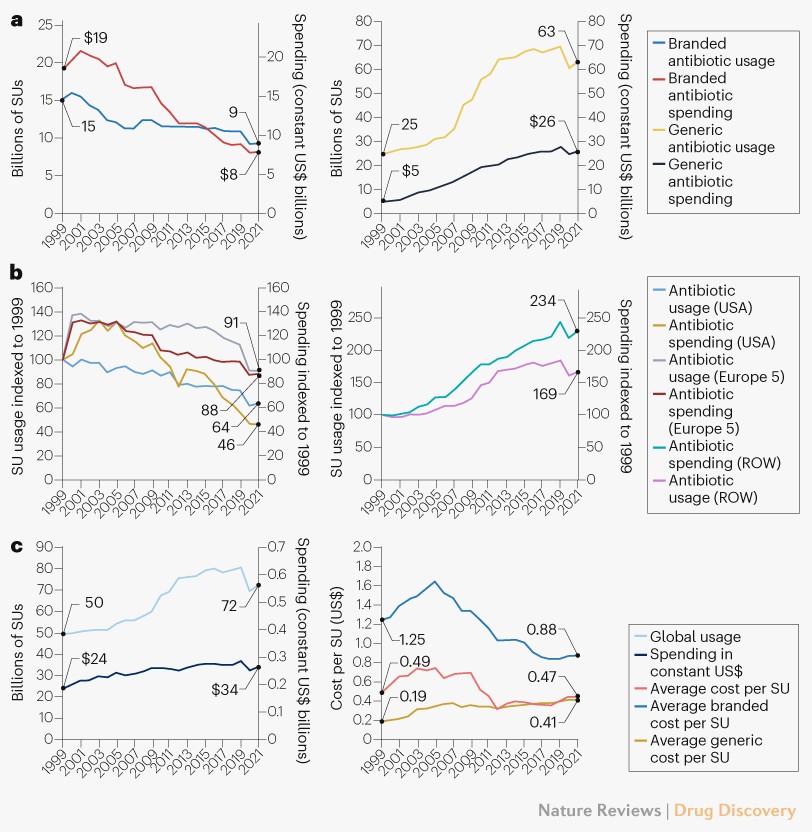
Trends in the global antibiotics market

AlexandrosSfakianakis shared this article with you from Inoreader

d41573-023-00029-5_24025932.jpg

Nature Reviews Drug Discovery, Published online: 15 February 2023; doi:10.1038/d41573-023-00029-5

Trends in the global antibiotics market
View on Web

Structural Analysis of MALAT1 long non-coding RNA in cells and in evolution [Article]

AlexandrosSfakianakis shared this article with you from Inoreader

Although not canonically polyadenylated, the long non-coding RNA MALAT1 (Metastasis Associated Lung Adenocarcinoma Transcript 1) is stabilized by a highly conserved 76 nucleotide triple helix structure on its 3' end. The entire MALAT1 transcript is over 8,000 nucleotides long in humans. The strongest structural conservation signal in MALAT1 (as measured by co-variation of base-pairs) is in the triple helix structure. Primary sequence analysis of co-variation alone does not reveal the degree of structural conservation of the entire full-length transcript, however. Furthermore, RNA structure is often context dependent; RNA binding proteins that are differentially expressed in different cell types may alter structure. We investigate here the in cell and cell free structures of the full-length human and green monkey (Chlorocebus sabaeus) MALAT1 transcripts in multiple tissue-derived cell lines using SHAPE chemical probing. Our data reveal levels of uniform str uctural conservation in different cell lines, in cells and cell free, and even between species, despite significant differences in primary sequence. The uniformity of the structural conservation across the entire transcript suggests that, despite seeing co-variation signals only in the triple helix junction of the lncRNA, the rest of the transcript's structure is remarkably conserved at least in primates and across multiple cell types and conditions.

View on Web

Τρίτη 14 Φεβρουαρίου 2023

MED27 plays a tumor‐promoting role in breast cancer progression by targeting KLF4

AlexandrosSfakianakis shared this article with you from Inoreader

Abstract

Our study found that MED27 was highly expressed in breast cancer and promoted breast cancer development, especially its metastasis and stemness maintenance, by targeting KLF4 both in vitro and in vivo. Mechanistically, MED27 transcriptionally activated KLF4 by binding to its promoter region in breast cancer cells. MED27 silencing sensitized breast cancer cells to epirubicin therapy. The high expression of MED27 and KLF4 alone or both was positively correlated with the differentiation status of cancer cells and predicted poor prognosis of breast cancer patients. All these findings provide the potential of developing MED27/KLF4 signaling axis as the cascade candidate therapeutic targets and prognosis biomarkers in breast cancer.

View on Web

Nonlinear absorption‐based analysis of energy deposition in melanosomes for 532‐nm short‐pulsed laser skin treatment

AlexandrosSfakianakis shared this article with you from Inoreader

Abstract

Background and Objectives

The clinical use of 532-nm short-pulsed lasers has provided effective treatment of epidermal pigmented lesions. However, the detection of significant differences in treatment effects between picosecond and nanosecond lasers has still varied among clinical studies. For robust evaluation of the differences based on the treatment mechanism, this study presents a nonlinear absorption-based analysis of energy deposition in melanosomes for 532-nm short-pulsed laser treatment.

Study Design/Materials and Methods

Nonlinear absorption by melanin is modeled based on sequential two-photon absorption. Absorption cross-sections and nonradiative lifetimes of melanin, which are necessary for the nonlinear absorption-based analysis, are determined from transmittance measurement. Using the model and parameters, energy deposition in melanosomes was calculated with varying fluence and pulse width settings, including actual clinical parameters.

Results

The energy deposition in melanosomes increased with shorter laser pulses, and subnanosecond laser pulses were found to be most efficient. The comparison of energy deposition calculated using clinical parameters demonstrated the differences in treatment effects between picosecond and nanosecond lasers reported in clinical studies.

Conclusion

The nonlinear absorption-based analysis provides quantitative evidence for the safety and efficacy evaluation of short-pulsed laser treatments, which may lead to the establishment of numerical indices for determining treatment conditions. Future studies considering the effects of the surrounding tissue on energy deposition in melanosomes will be needed.

View on Web

Evaluation of the effectiveness of maternal immunization against pertussis in Alberta using agent-based modeling: A Canadian immunization research network study

AlexandrosSfakianakis shared this article with you from Inoreader
via Vaccine

fbworm.png

CONCLUSIONS: Our model predicts significant reduction in future pertussis cases in infants due to maternal vaccination, with immunological blunting slightly moderating its effectiveness. The model is most sensitive to maternal vaccination coverage. The interruption of exposure pathways plays a role in the reduction of pertussis burden in infants due to maternal immunization. The effect of maternal immunization on population other than infants remains to be elucidated.PMID:36775775 | DOI:10.1016/j.vaccine.2022.12.071 (Source: Vaccine)
View on Web

MRI Investigation of the Differential Impact of Left Ventricular Ejection Fraction After Myocardial Infarction in Elderly vs. Nonelderly Patients to Predict Readmission for Heart Failure

AlexandrosSfakianakis shared this article with you from Inoreader

Background

Patients with ST-segment elevation myocardial infarction (STEMI), especially elderly individuals, have an increased risk of readmission for acute heart failure (AHF).

Purpose

To study the impact of left ventricular ejection fraction (LVEF) by MRI to predict AHF in elderly (>70 years) and nonelderly patients after STEMI.

Study Type

Prospective.

Population

Multicenter registry of 759 reperfused STEMI patients (23.3% elderly).

Field Strength/Sequence

1.5-T. Balanced steady-state free precession (cine imaging) and segmented inversion recovery steady-state free precession (late gadolinium enhancement) sequences.

Assessment

One-week MRI-derived LVEF (%) was quantified. Sequential MRI data were recorded in 579 patients. Patients were categorized according to their MRI-derived LVEF as preserved (p-LVEF, ≥50%), mildly reduced (mr-LVEF, 41%–49%), or reduced (r-LVEF, ≤40%). Median follow-up was 5 [2.33–7.54] years.

Statistical Tests

Univariable (Student's t, Mann–Whitney U, chi-square, and Fisher's exact tests) and multivariable (Cox proportional hazard regression) comparisons and continuous-time multistate Markov model to analyze transitions between LVEF categories and to AHF. Hazard ratios (HR) with 95% confidence intervals (CIs) were computed. P < 0.05 was considered statistically significant.

Results

Over the follow-up period, 79 (10.4%) patients presented AHF. MRI-LVEF was the most robust predictor in nonelderly (HR 0.94 [0.91–0.98]) and elderly patients (HR 0.94 [0.91–0.97]). Elderly patients had an increased AHF risk across the LVEF spectrum. An excess of risk (compared to p-LVEF) was noted in patients with r-LVEF both in nonelderly (HR 11.25 [5.67–22.32]) and elderly patients (HR 7.55 [3.29–17.34]). However, the mr-LVEF category was associated with increased AHF risk only in elderly patients (HR 3.66 [1.54–8.68]). Less transitions to higher LVEF states (n = 19, 30.2% vs. n = 98, 53%) and more transitions to AHF state (n = 34, 53.9% vs. n = 45, 24.3%) were observed in elderly than nonelderly patients.

Data Conclusion

MRI-derived p-LVEF confers a favorable prognosis and r-LVEF identifies individuals at the highest risk of AHF in both elderly and nonelderly patients. Nevertheless, an excess of risk was also found in the mr-LVEF category in the elderly group.

Evidence Level

2.

Technical Efficacy

Stage 2.

View on Web

QSM Throughout the Body

AlexandrosSfakianakis shared this article with you from Inoreader

Magnetic materials in tissue, such as iron, calcium, or collagen, can be studied using quantitative susceptibility mapping (QSM). To date, QSM has been overwhelmingly applied in the brain, but is increasingly utilized outside the brain. QSM relies on the effect of tissue magnetic susceptibility sources on the MR signal phase obtained with gradient echo sequence. However, in the body, the chemical shift of fat present within the region of interest contributes to the MR signal phase as well. Therefore, correcting for the chemical shift effect by means of water-fat separation is essential for body QSM. By employing techniques to compensate for cardiac and respiratory motion artifacts, body QSM has been applied to study liver iron and fibrosis, heart chamber blood and placenta oxygenation, myocardial hemorrhage, atherosclerotic plaque, cartilage, bone, prostate, breast calcification, and kidney stone.

View on Web

Use of a novel body mandibular plane (mental foramen–protuberance menti) in analyzing mandibular asymmetry compared with conventional border mandibular plane

AlexandrosSfakianakis shared this article with you from Inoreader

m_i1945-7103-93-2-c01.png?Expires=173949

ABSTRACT
Objectives
To compare a novel body mandibular horizontal plane (mental foramen–protuberance menti; Body-MHP) with the conventional border mandibular horizontal plane (gonion–menton [Me]; Border-MHP) to assess mandibular body inclination and dental compensation of skeletal Class III patients with and without facial asymmetry.
Materials and Methods
Retrospective data obtained from diagnostic cone-beam computed tomography of 90 skeletal Class III patients (mean age, 21.67 ± 2.93 years; range, 15.0–30.6 years) were divided into symmetry (n = 30) and asymmetry groups (n = 60). The asymmetry group was subdivided into roll (n = 30) and non-roll types (n = 30). The differences in body inclination and dental measurements (distance and angle) according to two mandibular planes (Body-MHP and Border-MHP) were assessed in the groups and subgroups.
Results
Mandibular body inclinations relative to the Body-MHP were not different in the roll-type asymmetric mandibl e between the sides, while those relative to the Border-MHP were different (P < .001). For the mandibular first molar positions relative to the Border-MHP, the differences in vertical distance between the sides were undermeasured and the inclination differences were overmeasured when compared relative to the Body-MHP.
Conclusions
The Body-MHP demonstrated better bilateral similarity in body inclination compared with the Border-MHP in patients with roll-type facial asymmetry. The novel body mandibular plane ensures an accurate diagnosis for tooth movement and jaw surgery, particularly in the roll-type asymmetric mandible.
View on Web

Participation in breast cancer screening and its influence on other cancer screening invitations: study in women aged 56 years old in four French departments

AlexandrosSfakianakis shared this article with you from Inoreader
imageBackground Today, women 50 years of age are offered three types of cancer screening in France. However, participation is not optimal. The aim was to describe (1) participation in organised breast cancer screening (OS) of women aged 56 years old, and the influence of this participation on colorectal and cervical cancer screening, (2) the reasons for non-participation in breast cancer OS, and (3) the reasons for screening before age 50. Methods A questionnaire was sent to 56-year-old women in four French departments to identify their participation behaviour in three breast cancer OS invitations and their reasons for non-participation. Three groups were determined according to the number of participations in breast cancer OS (3, 1–2 and 0). We described the quantitative responses and grouped the qualitative responses thematically. Results A total of 4634 women responded to the questionnaire. Seventy-six percent had undergone all three breast cancer OS, 16% irregular and 7% non-participant. Among women who irregularly perform breast cancer OS, 50.5% also irregularly perform colorectal cancer OS. Women who participated in all three invitations for the breast cancer OS performed more smear tests than women in the other groups. Many of the irregular participants or non-participants underwent opportunistic screening, often initiated before the age of 50. The reasons for non-participation in breast cancer OS were mainly medical or participation in opportunistic screening. Conclusion There is no fundamental opposition to participation in breast cancer screening. However, it remains of the utmost importance that women should be better informed about OS and its benefits.
View on Web

Δευτέρα 13 Φεβρουαρίου 2023

Associations between genetically predicted levels of blood metabolites and pancreatic cancer risk

AlexandrosSfakianakis shared this article with you from Inoreader

Abstract

Pancreatic ductal adenocarcinoma (PDAC) is one of the most aggressive solid malignancies, which is featured by systematic metabolism. Thus, a better understanding of metabolic dysregulation in PDAC is important to better characterize its etiology. Here, we performed a large metabolome-wide association study (MWAS) to systematically explore associations between genetically predicted metabolite levels in blood and PDAC risk. Using data from 881 subjects of European descent in the TwinsUK Project, comprehensive genetic models were built to predict serum metabolite levels. These prediction models were applied to the genetic data of 8,280 cases and 6,728 controls included in the PanScan (I, II, and III) and PanC4 consortia. After assessing the metabolite-PDAC risk associations by a slightly modified TWAS/FUSION framework, we identified five metabolites (including two dipeptides) showing significant associations with PDAC risk at false discovery rate (FDR)<0.05. Integrated with gut m icrobial information, two-sample Mendelian randomization (MR) analyses were further performed to investigate the relationship among serum metabolites, gut microbiome features, and PDAC. The flavonoid-degrading bacteria Flavonifractor sp90199495 was found to be associated with metabolite X – 21849, and it was also shown to be associated with PDAC risk. Collectively, our study identified novel candidate metabolites for PDAC risk, which could lead to new insights into the etiology of PDAC and improved treatment options.

View on Web