Αρχειοθήκη ιστολογίου

Πέμπτη 25 Αυγούστου 2022

Low spontaneous clearance rates of recently acquired hepatitis C virus in HIV-positive MSM (The PROBE-C Study)

alexandrossfakianakis shared this article with you from Inoreader

cid_ogimage.png

Abstract
Background
Using direct acting antivirals (DAA) for recently acquired hepatitis C virus (RAHCV-) infections, particularly in HIV-positive men having sex with men (MSM), dramatically reduced hepatitis C incidence. However, implementation into clinical practice is challenging. The aim of this study was to analyse spontaneous clearance (SC) rates of RAHCV and to identify predictors of SC.
Methods
The PROBE-C study is an observational European cohort on RAH CV-infections in HIV-positive MSM. Between 2007 and 2017, RAHCV-infections were documented with at least 12 months of follow-up. Fisher's exact, chi-square and Mann-Whitney U test were used for statistical analysis.
Results
464 RAHCV-infections were documented. 457/464 (98%) cases were male, median age was 41 years (IQR 38-46). Main risk groups for HCV-transmission were MSM (98.9%). Most participants were infected with HCV-genotype (GT) 1 (78.3%). Median baseline HCV-RNA was 230,000 (135,000-474,432) IU/mL, median CD4+-T cell count was 574 (547-604) cells/µL. 92% of all cases received combination antiretroviral therapy with 91% showing suppressed HIV-RNA (<200 copies/mL). Median maximum alanine aminotransferase was 445 (402-522) U/L.SC of RAHCV-infection occurred in 55/464 (11.9%) cases. A >2log decline in HCV-RNA four weeks after diagnosis of RAHCV infection was the strongest predictor of SC (p < 0.001, sensitivity 96.4%, specificity 97.5%, PPV 8 4.1%, NPV 99.5%).
Conclusions
SC of RAHCV in HIV-positive MSM is only found in 11.9% of cases and a <2log drop in HCV-RNA at week four after diagnosis should prompt for early DAA-based treatment. However, immediate DAA treatment for RAHCV-infection may also be favoured in patients with ongoing transmission risk behaviour.
View on Web

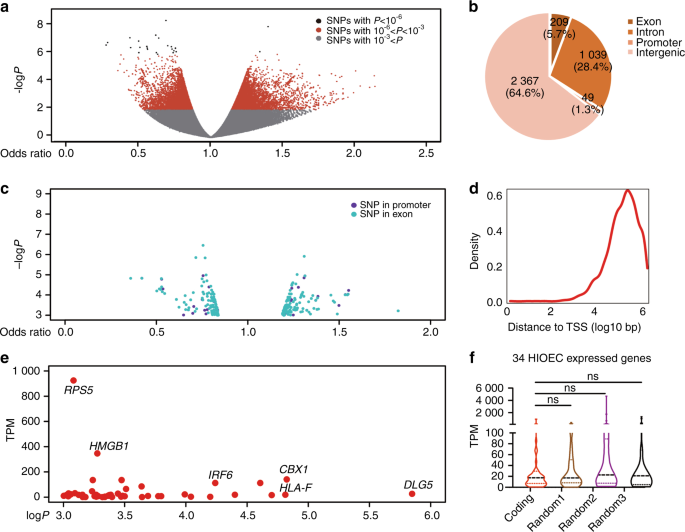
Chromatin conformation of human oral epithelium can identify orofacial cleft missing functional variants

alexandrossfakianakis shared this article with you from Inoreader

41368_2022_194_Fig1_HTML.png

International Journal of Oral Science, Published online: 25 August 2022; doi:10.1038/s41368-022-00194-0

Chromatin conformation of human oral epithelium can identify orofacial cleft missing functional variants
View on Web

Plasma Circulating Tumor HPV DNA and HPV-Related Oropharynx Cancer—A Caution—Reply

alexandrossfakianakis shared this article with you from Inoreader

jamanetwork.com

In Reply Dr Johnson and colleagues raise a good point, as expressed in our article, that our findings should not be inferred to suggest that circulating tumor human papillomavirus (HPV) DNA (ctHPVDNA) is ready to be used for screening. Our observation that no ctHPVDNA was detected in healthy participants with detectable salivary HPV DNA or E6 serum antibody suggests a low false-positive rate (ie, suggests good specificity). However, as pointed out in the discussion of our research letter, and by Johnson et al, it is possible that the detection methods used in our study could be insensitive, and additional research is needed to verify the finding of high specificity in our study.
View on Web

Τετάρτη 24 Αυγούστου 2022

Langerhans cell histiocytosis of the hard palate in an infant

alexandrossfakianakis shared this article with you from Inoreader

Publication date: Available online 24 August 2022

Source: Journal of Oral and Maxillofacial Surgery, Medicine, and Pathology

Author(s): Takeshi Togawa, Akinari Sugauchi, Kaori Oya, Yusuke Yokota, Emiko Tanaka Isomura

View on Web

Prior exposure to azithromycin and azithromycin resistance among persons diagnosed with Neisseria gonorrhoeae infection at a Sexual Health Clinic 2012-2019

alexandrossfakianakis shared this article with you from Inoreader

cid_ogimage.png

Abstract
Background
There is conflicting evidence on whether prior azithromycin (AZM) exposure is associated with reduced susceptibility to AZM (AZMRS) among persons infected with Neisseria gonorrhoeae (NG).
Methods
The study population included Public Health-Seattle & King County Sexual Health Clinic (SHC) patients with culture-positive NG infection at ≥1 anatomic site whose isolates were tested for AZM s usceptibility 2012-2019. We used multivariate logistic regression to examine the association of time since last AZM prescription from the SHC in ≤12 months with subsequent diagnosis with AZMRS NG (minimum inhibitory concentration [MIC] ≥2.0 µg/ml) and used linear regression to assess the association between number of AZM prescriptions in ≤12 months and AZM MIC level, controlling for demographic, behavioral, and clinical characteristics.
Results
A total of 2,155 unique patients had 2,828 incident NG infections, 156 (6%) of which were caused by AZMRS NG. AZMRS NG was strongly associated with receipt of AZM from the SHC in the prior 29 days (adjusted odds ratio [aOR] 6.76, 95% CI 1.76-25.90), but not with receipt of AZM in the prior 30-365 days. Log AZM MIC level was not associated with the number of AZM prescriptions within ≤12 months (Adjusted correlation [aCor] 0.0004, 95% CI -0.04, 0.037), but was associated with number of prescrip tions with <30 days (adjusted coefficient [aCoef] 0.56, 95% CI 0.13-0.98)
Conclusion
Recent individual-level AZM treatment is associated with subsequent AZMRS gonococcal infections. The long half-life and persistence of subtherapeutic levels of AZM may result in selection of resistant NG strains in persons with recent AZM use.

View on Web

Bone resorption after maxillary reconstruction with the vascularized free iliac flap

alexandrossfakianakis shared this article with you from Inoreader
The aim of this study was to evaluate the resorption of the iliac bone after maxillary reconstruction with a vascularized free iliac flap. Twenty-seven patients with maxillary defects who underwent maxillary reconstruction with the vascularized free iliac flap between January 2017 and January 2021 were included. Computed tomography (CT) images taken at 1 week, approximately 6 months, and 1 year after the surgery were used for evaluation. The total iliac bone thickness and height, cortical bone thickness, and cancellous bone density were measured in the CT images. (Source: International Journal of Oral and Maxillofacial Surgery)
View on Web

Variability in the Estimated Amplitude of Vowel-Evoked Envelope Following Responses Caused by Assumed Neurophysiologic Processing Delays

alexandrossfakianakis shared this article with you from Inoreader
AbstractVowel-evoked envelope following responses (EFRs) reflect neural encoding of the fundamental frequency of voice (f0). Accurate analysis of EFRs elicited by natural vowels requires the use of methods like the Fourier analyzer (FA) to consider the production-relatedf0 changes. The FA 's accuracy in estimating EFRs is, however, dependent on the assumed neurophysiological processing delay needed to time-align thef0 time course and the recorded electroencephalogram (EEG). For male-spoken vowels (f0 ~ 100 Hz), a constant 10-ms delay correction is often assumed. Since processing delays vary with stimulus and physiological factors, we quantified (i) the delay-related variability that would occur in EFR estimation, and (ii) the influence of stimulus frequency, non-f0 related neural ac...
View on Web

Τρίτη 23 Αυγούστου 2022

Is smallpox vaccination protective against Human Monkeypox?

alexandrossfakianakis shared this article with you from Inoreader

Abstract text

Human Monkeypox (HMPX) has been spreading to non-endemic countries rapidly during spring-summer 2022 through human-to-human transmission, involving thousands of people, mostly men-who-have-sex-with-men. Little is known about the degree of protection due to previous smallpox vaccination. The cases described in our series show a mild clinical presentation of HMPX in those previously vaccinated. Our data are encouraging, and further investigations may lead to a fast public health prevention strategy.

This article is protected by copyright. All rights reserved.

View on Web

Is lithium neuroprotective? An updated mechanistic illustrated review

alexandrossfakianakis shared this article with you from Inoreader

Abstract

Background

Neurodegeneration is a pathological process characterized by progressive neuronal impairment, dysfunction, and loss due to mitochondrial dysfunction, oxidative stress, inflammation, and apoptosis. Many studies have shown that lithium protects against neurodegeneration. Herein, we summarize recent clinical and laboratory studies on the neuroprotective effects of lithium against neurodegeneration and its potential to modulate mitochondrial dysfunction, oxidative stress, inflammation, and apoptosis. Recent findings indicate that lithium regulates critical intracellular pathways such as phosphatidylinositol-3 (PI3)/protein kinase B (Akt)/glycogen synthase kinase-3 (GSK3β) and PI3/Akt/response element-binding protein (CREB)/brain-derived neurotrophic factor (BDNF).

Methods

We queried PubMed, Web of Science, Scopus, Elsevier, and other related databases using search terms related to lithium and its neuroprotective effect in various neurodegenerative diseases and events from January 2000 to May 2022. We reviewed the major findings and mechanisms proposed for the effects of lithium.

Results: Lithium's neuroprotective potential against neural cell degeneration is mediated by inducing anti-inflammatory factors, antioxidant enzymes, and free radical scavengers to prevent mitochondrial dysfunction. Lithium effects are regulated by two essential pathways: PI3/Akt/GSK3β and PI3/Akt/CREB/BDNF.

Conclusion

Lithium acts as a neuroprotective agent against neurodegeneration by preventing inflammation, oxidative stress, apoptosis, and mitochondrial dysfunction using PI3/Akt/GSK3β and PI3/Akt/CREB/BDNF signaling pathways.

View on Web

Effects of root canal enlargement on unprepared areas and coronal dentine thickness of three‐rooted maxillary first premolars with different root configurations: a stepwise micro‐CT study

alexandrossfakianakis shared this article with you from Inoreader

Abstract

Aim

To evaluate the effects of progressive root canal enlargements on the unprepared surface area and remaining dentine thickness of three-rooted maxillary first premolars with different root configurations.

Methodology

Thirty three-rooted maxillary first premolars with 3 root configurations (n=10) were selected and scanned in a micro-CT device. The root canals were sequentially enlarged with rotary instruments sizes 30.02 (step 1), 30.04 (step 2), and 30.06 (step 3). After each step, a new scan was taken. Analysed parameters included morphometric measurements (length, volume and surface area), number of static voxels, and minimal dentine thickness. Statistic analyses were performed with one-way ANOVA post hoc Tukey tests and paired sample t-test at a significance level of 5%.

Results

No statistical differences were observed among groups regarding the morphometric parameters and static voxels (p > 0.05). The minimal dentine thickness of the distobuccal root significantly changed depending on the root configuration (p < 0.05), while no differences were observed in the other roots (p > 0.05). A great variation in the position of the minimal dentine thickness was observed after preparation. Overall, mean percentage reduction of dentine thickness was higher in the buccal roots than in the palatal root (p < 0.05). In the mesiobuccal and distobuccal root, the number of slices with minimal dentine thickness lower than 0.05 mm increases 2 to 3 times and 3 to 4 times, respectively, from steps 1 to 3.

Conclusions

Instruments sizes 30.02 and 30.04 can be safely and effectively used to enlarge the buccal and palatal canals of three-rooted maxillary first premolars.

View on Web

Serum vitamin D and cardiometabolic risk factors

alexandrossfakianakis shared this article with you from Inoreader

Abstract

Low serum 25-hydroxyvitamin D (25(OH)D) concentrations have been associated with greater adiposity and an adverse cardiometabolic risk profile, yet findings are inconsistent and the role of vitamin D status in cardiovascular disease (CVD) remains uncertain. We aimed to examine the associations between serum 25(OH)D and CVD risk factors in the British population. We analysed data on 2842 subjects aged ≥40 years enrolled in the National Diet and Nutrition Survey (NDNS 2008–2018). Based on serum 25(OH)D concentrations, study subjects were grouped in three categories: vitamin D deficiency (<25 nmol/L), vitamin D insufficiency (25-49 nmol/L) and vitamin D sufficiency status (≥50 nmol/mL). Differences in CVD risk factors between vitamin D deficiency or insufficiency and vitamin D sufficiency status were expressed in standard deviation scores (SDSs) and estimated through weighted multiple linear regression models. We found that vitamin D deficiency was directly associated with B MI, waist circumference, triglycerides and inversely associated with high-density lipoprotein cholesterol (HDL) values. The strongest associations were found between vitamin D deficiency and triglycerides (0.50 SDS, 95% CI: 0.24, 0.77) among men, and vitamin D deficiency and waist circumference (0.70 SDS, 95% CI: 0.56, 0.94), BMI (0.63 SDS, 95% CI: 0.39, 0.88) and triglycerides (0.54 SDS, 95% CI: 0.30, 0.77) among women. When adjusting for BMI the association with triglyceride attenuated (from 0.50 SDS to 0.39 SDS among men and from 0.54 SDS to 0.30 SDS among women). Our data indicates a relationship between inadequate vitamin D status and an adverse CVD risk profile. However, interventional studies are needed to establish possible benefits of vitamin D supplementation on cardiovascular risk.

This article is protected by copyright. All rights reserved.

View on Web